Shifting from "I Can’t" to "How Can I?": My 17-Year-Old’s First Solo Road Trip and the Power of Dialogue
My 17-year-old daughter, who has only just put on her P-plates, came to us with a request.
"I want to meet up with a group of mates at a nature park 50 kilometres away. Is it okay if I drive there by myself?"
That meant over an hour of solo driving for a brand-new driver. Some of the regional roads require maintaining a speed of 100 km/h, and without the constant stimulation of city traffic, fatigue can easily set in.
As adults with years of experience behind the wheel, we understand these risks instinctively. However, for a teenager with a fresh licence, the gravity of such risks can be difficult to truly grasp.
Currently, we have an agreement at home: until she gains more experience, she cannot have friends in her car. While losing her own life in an accident would be a tragedy beyond words, surviving an accident where her friend dies is a burden she would have to carry forever. We’ve discussed this many times, and she agrees. So, taking friends along wasn't an option this time either.
The Parental Dilemma: Protection vs. Potential
I believe this is a common feeling for parents worldwide. As a parent, the last thing you want is to put your child in danger. No matter how much experience they gain or how old they get, they often still look inexperienced and vulnerable in a parent's eyes. Because we care so much, it is hard to simply say "YES".
In our family, my husband has extensive experience with long-distance driving through his work in the mountains, so he was particularly hesitant about letting our daughter drive such a distance alone. In the suburbs at dusk, wildlife often darts onto the road—a situation our daughter has no experience handling yet.
If a front tyre were to blow out, the steering wheel would be pulled with immense force. She hasn't yet experienced that terror or the difficulty of maintaining control.
However, stopping her purely because "it’s dangerous" could also mean nipping her potential in the bud.
So, as parents, we proposed a compromise.
"You can drive. But we will come along in the car. Once we reach the destination, we will keep our distance so your friends don't see us, and we’ll just watch from afar."
Of course, for a teenager, having your parents tag along to a hangout with friends is the height of "uncool". We shared with her that we didn’t actually want to go ourselves; this was a significant concession from our side.
Still, her answer was a firm "NO". The negotiation hit a complete deadlock.
"So, if I don't agree to go with you, I can't go at all?"
A heavy, stagnant silence filled the room.
Silence Leads to the Daughter's Own Realisation
At that moment, I spoke up.
"Okay, let's make 'going' the goal. To take care of both our worries and your wish, what kind of plan could we come up with?"
Actually, I already had a proposal in mind—the best solution based on my own life experience. But I held my tongue and waited in the silence. It was vital that she think for herself and explore the possibilities.
Before long, she came up with this suggestion:
She would stop at a shopping centre in a town about 30 minutes away.
There, she would send us a message to say she was safe and buy a caffeinated drink.
Once she reached her destination, she would message us immediately.
She would do the same on the way back.
This way, she could guarantee our peace of mind without us having to follow her. Remarkably, her idea was exactly what I had envisioned.
Dialogue Until 'Hara-ochi' is Achieved
However, one small concern remained. For a teenager caught up in the excitement of seeing friends, it can be difficult to remember and keep promises made to parents. If she forgot to message because she was having too much fun, the plan would fail.
That is why we spent time in dialogue to share our thoughts deeply once more. It wasn't just about deciding on a plan and agreeing to it; it was about ensuring she reached a state of 'hara-ochi'—a deep, gut-level understanding and acceptance.
We discussed:
Why we created this plan together.
Why it was essential to contact us and take breaks exactly as promised.
The importance of not pushing herself and stopping to rest if she felt tired.
This wasn't a superficial exchange of words. I believe the "intent" and "feeling" behind the words were truly shared. With this, the whole family was in agreement. My daughter left the room with a smile to tell her friends, "I can go!"
Letting Go of the Hand, but Keeping the Heart Connected
Once she left the room, my husband voiced his lingering anxiety. "Will she really be okay?" It was a natural worry. We continued talking about what we could do for her as parents.
Our job is to help her fledge. Even if we physically let go of her hand, we must keep our hearts connected. We reminded ourselves of her successful long-distance drive during a camping trip last month and decided we had to "trust" her.
The next day, she busily finished her chores on time and set off in high spirits. We spent the day in a state of "waiting without waiting", keeping an eye on the time.
Eventually, a message arrived: "Safely reached the town. Having an energy drink now." Later, another message confirmed she had arrived at her destination. We breathed a sigh of relief. While we were feeling settled, a photo and a message popped up on my phone:
"Thank you so much for letting me come out. I know it was difficult for you to let me come but I'm having a really fun time."


She understood. She didn't forget to acknowledge our feelings and express her gratitude. She is growing up well.
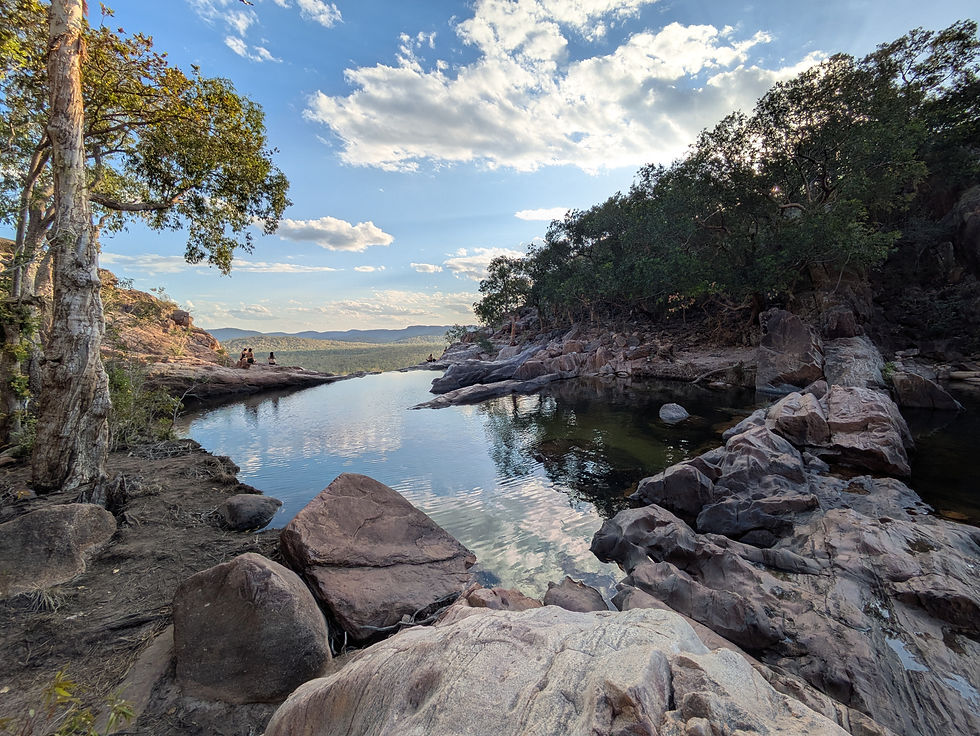
The sight of the sun-drenched nature park in the photo, coupled with those words—it was the moment our parental worries and struggles were rewarded.
Applying Daily Dialogue to Society and Organisations
This experience wasn't about forcing an opinion or judging whose idea was better. It was simply about sharing feelings and listening to one another. It was about starting a conversation from "how can we?" rather than "we can't".
The process of facing a challenge as a "personal matter" for the whole family is, I believe, an essential approach that can be applied to many situations in today's world.
Whether it's leadership, organisational and talent development, or the integration of sustainability, this attitude is required when facing complex challenges with no easy answers. People don't truly move when someone unilaterally imposes rules or "correct" answers. Through dialogue, by sharing intentions and facing challenges together, people reach that state of 'hara-ochi' and shift toward proactive action.
The small events within a family and the large challenges of business and society might require the same fundamental approach.
Every world is up to our mindset and action.
Rather than giving up from the start, we should open a space for dialogue that invites various voices. It doesn't have to be a 100% perfect solution; it’s about continuing to explore a path that everyone can be "reasonably" satisfied with. I believe this is the essence of co-creation. The accumulation of these small daily practices will eventually shift mindsets, transform organisations, and open the world of great possibilities we imagine.